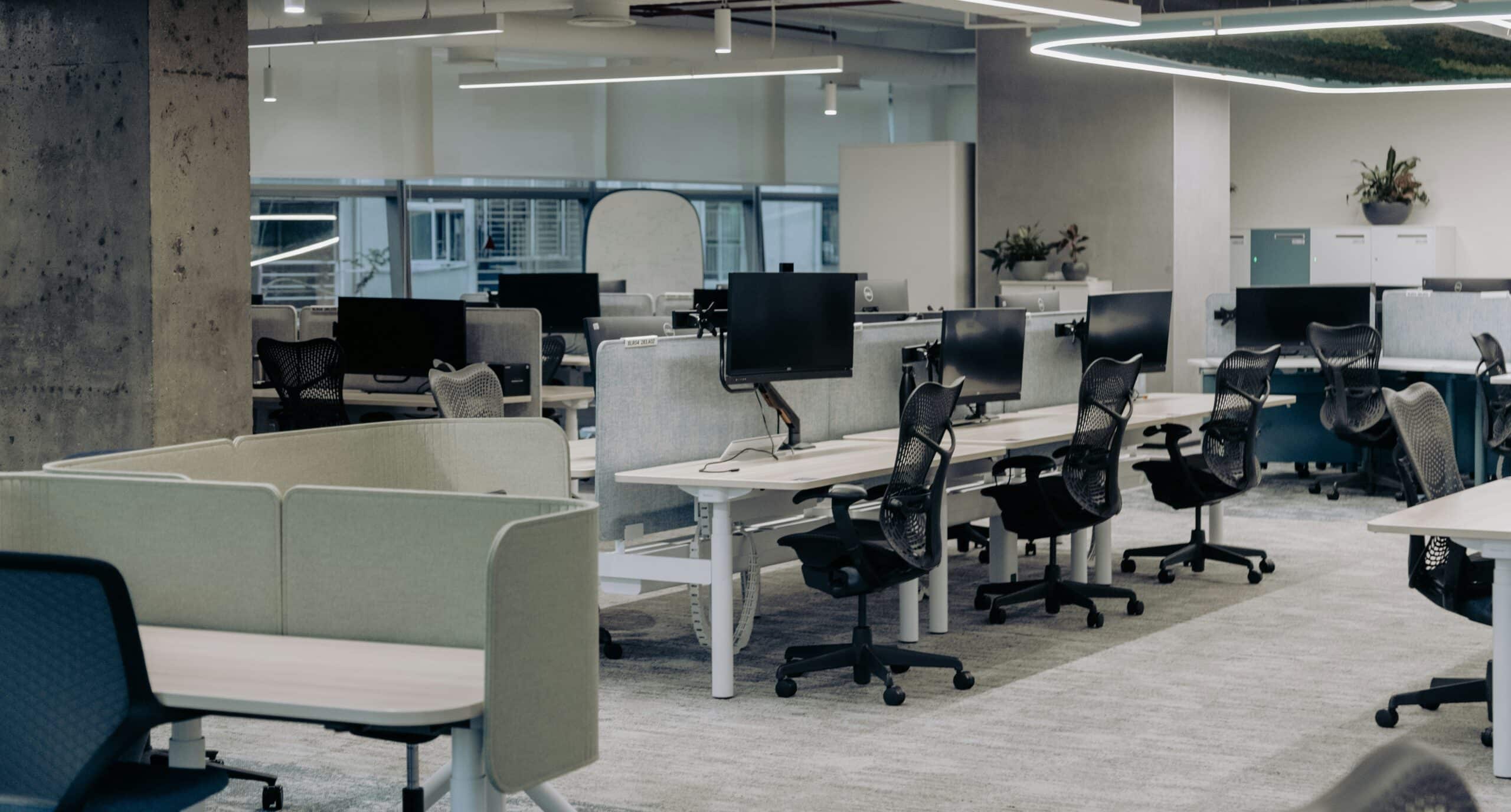

Hybrid Work Is Here to Stay
Hybrid work has evolved from a temporary solution into a permanent way of working for organizations around the world. Employees now divide their time between the office, home, and other remote locations, giving them greater flexibility while enabling companies to attract and retain top talent.
However, this flexibility also creates new challenges. One of the most significant is maintaining strong collaboration, communication, and team cohesion when employees are no longer in the same place every day.
According to the Microsoft Work Trend Index 2024, employees continue to value workplace flexibility, while business leaders emphasize the importance of in-person collaboration for innovation, knowledge sharing, and building relationships. The report highlights that organizations need technology and workplace strategies that support both flexibility and meaningful face-to-face interactions.
The question for organizations is therefore no longer whether to embrace hybrid work, but how to create an environment where hybrid teams can collaborate effectively.
Why Collaboration Has Become More Challenging
In traditional office environments, collaboration often happened naturally. Employees could easily ask questions, exchange ideas during coffee breaks, or solve problems through spontaneous conversations.
Hybrid work changes these dynamics.
Today, organizations frequently experience challenges such as:
- Team members working in the office on different days.
- Fewer spontaneous conversations between colleagues.
- Knowledge sharing becoming more structured instead of organic.
- Longer onboarding periods for new employees.
- Reduced opportunities for informal networking.
- More complex coordination across departments.
Without intentional workplace planning, hybrid work can gradually weaken collaboration and reduce employees’ sense of belonging.
Research published in Gallup’s State of the Global Workplace consistently shows that highly engaged teams are more productive, more innovative, and achieve stronger business outcomes. Creating opportunities for meaningful collaboration is therefore essential for maintaining employee engagement in hybrid workplaces.
The Office Has a New Purpose
The role of the office has fundamentally changed.
Instead of serving primarily as a place for individual work, today’s office increasingly functions as a destination for collaboration.
Employees are now more likely to visit the office for activities such as:
- Team meetings
- Workshops
- Brainstorming sessions
- Customer meetings
- Cross-functional projects
- Training sessions
- Onboarding new colleagues
- Networking and relationship building
Focused individual work often takes place remotely, while office days are used to strengthen collaboration and company culture.
According to the JLL Global Future of Work Survey, organizations continue to invest in collaborative office spaces, flexible workplace concepts, and technology that enhances the employee experience. The office is increasingly viewed as a strategic collaboration hub rather than simply a collection of desks.

Desk Booking Is About More Than Reserving a Desk
Many people still associate desk booking with one simple task: reserving a workstation.
Modern workplace management platforms offer much more.
An intelligent desk booking solution enables organizations to:
- Coordinate team office days.
- Help colleagues work together in the same area.
- Improve office utilization.
- Increase workplace flexibility.
- Support hybrid work policies.
- Enhance the overall employee experience.
Instead of arriving at the office and hoping colleagues are present, employees can see who plans to be on-site and schedule their office visits accordingly.
This transforms workplace reservations into a tool for collaboration rather than simple administration.
Collaboration Starts Before Employees Arrive at the Office
Successful hybrid collaboration begins during workplace planning.
A modern desk booking platform allows employees to answer questions such as:
- Which colleagues will be in the office?
- Where is my project team sitting?
- Which collaborative workspaces are available?
- Are meeting rooms available nearby?
- Which floor offers the best environment for today’s work?
Having this information beforehand enables employees to organize productive office days centered around teamwork instead of spending valuable time coordinating logistics after arrival.
This visibility is especially valuable for organizations with multiple offices or distributed teams.
Flexible Workspaces Encourage Spontaneous Collaboration
Flexible workplace management also creates opportunities for spontaneous interaction.
Project teams can reserve desks in the same neighborhood, allowing them to:
- Solve problems faster.
- Exchange knowledge more naturally.
- Conduct workshops more efficiently.
- Make quicker decisions.
- Build stronger interpersonal relationships.
Research published by the Harvard Business Review emphasizes that face-to-face interactions continue to play an important role in building trust, encouraging creativity, and supporting innovation, even in organizations with mature hybrid work models
Technology should therefore make in-person collaboration easier, not replace it.
Workplace Analytics Create Better Collaboration
Modern workplace management extends far beyond reservations.
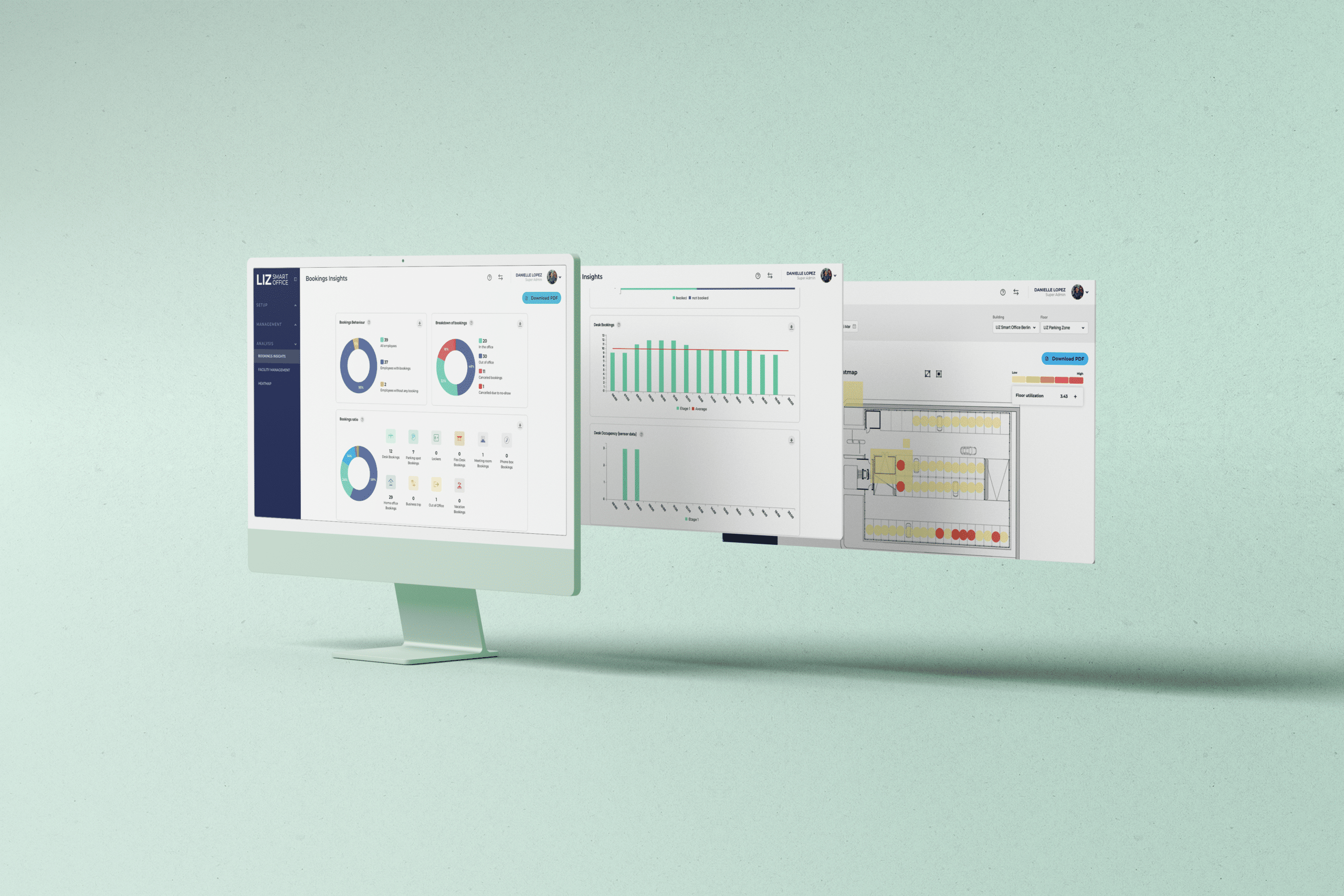
Organizations increasingly rely on workplace analytics to better understand how employees actually use office space.
Analytics can answer questions such as:
- Which teams frequently collaborate in person?
- Which office areas are most popular?
- Which weekdays have the highest occupancy?
- Where are collaboration spaces fully utilized?
- Which meeting rooms are underused?
These insights help workplace managers continuously improve office layouts, optimize collaboration zones, and adapt workplace strategies to employee behavior.
Reliable workplace data also supports long-term real estate planning and operational efficiency.
How LIZ Smart Office Supports Hybrid Team Collaboration
LIZ Smart Office provides organizations with a comprehensive workplace management platform designed specifically for hybrid work.
Rather than simply enabling desk reservations, the platform supports intelligent workplace planning through features such as:
- Digital desk booking
- Meeting room reservations
- Flexible desk sharing
- Real-time workplace availability
- Team visibility
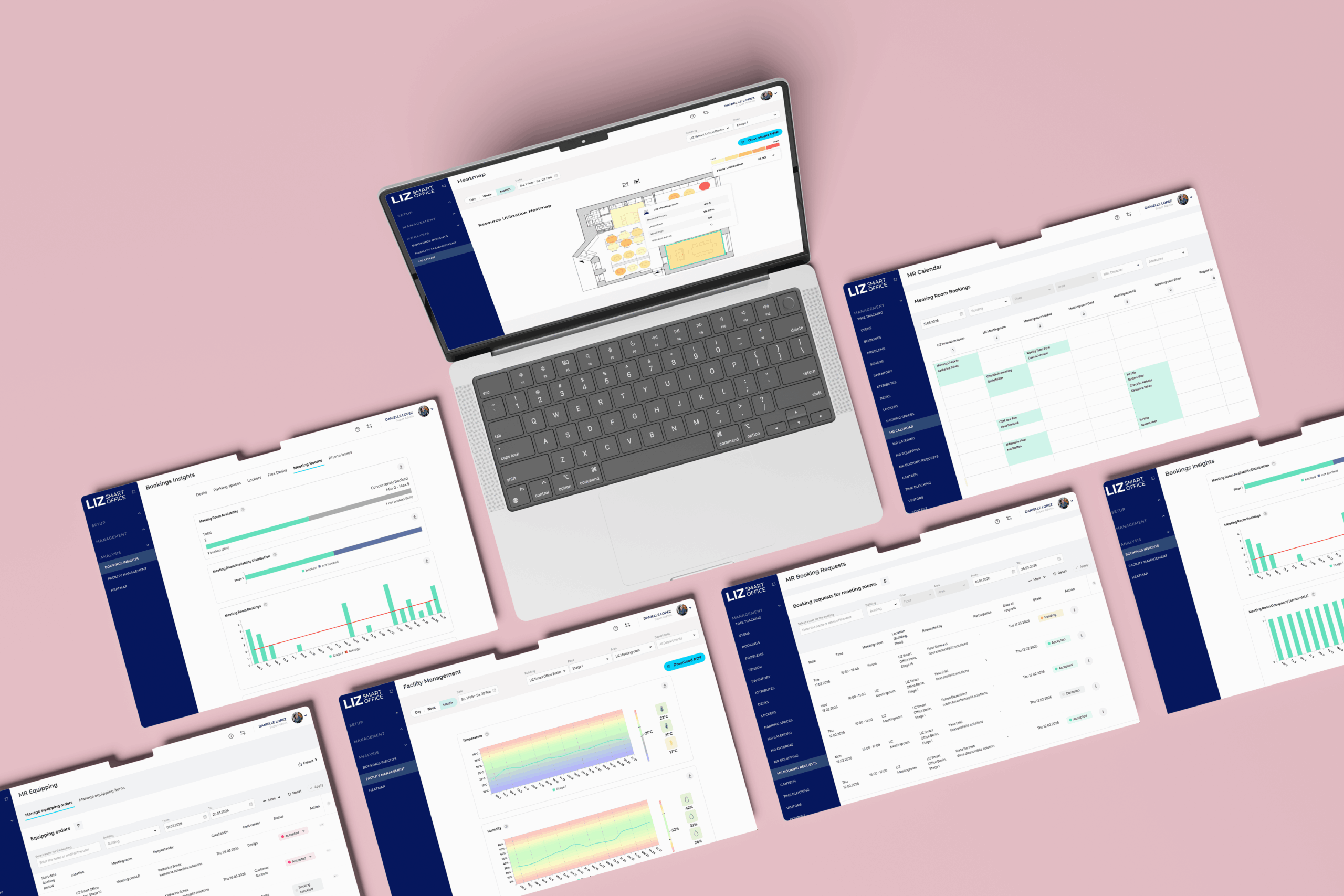
- Workplace analytics
- Office occupancy insights
- Data-driven workplace management
These capabilities allow organizations to create office environments that actively encourage collaboration while making the best possible use of available space.
The result is a workplace that supports employees, improves operational efficiency, and strengthens company culture.
Best Practices for Successful Hybrid Collaboration
Technology is only one part of an effective hybrid workplace strategy.
Organizations should also establish clear processes that encourage collaboration.
Recommended best practices include:
- Designate regular team collaboration days.
- Use desk booking to coordinate employee attendance.
- Create dedicated collaboration zones.
- Encourage managers to lead by example.
- Use workplace analytics to continuously improve office planning.
- Involve employees in workplace decisions.
- Regularly review office utilization and employee feedback.
Combining technology with thoughtful workplace policies creates an environment where hybrid collaboration can thrive.
Conclusion
Hybrid work has fundamentally changed how organizations collaborate.
The office is no longer simply a place where employees complete individual tasks. Instead, it has become a destination for teamwork, innovation, learning, and relationship building.
Organizations that invest in intelligent workplace management can strengthen collaboration while improving employee satisfaction and making more efficient use of office space.
LIZ Smart Office enables businesses to move beyond basic desk reservations by combining desk booking, workplace analytics, and smart workplace management into one integrated solution.
By helping employees coordinate office days, collaborate more effectively, and access reliable workplace information, LIZ Smart Office creates a connected, productive, and future-ready hybrid workplace.
FAQ
Frequently Asked Questions
Hybrid team collaboration helps employees work effectively across different locations while maintaining strong communication, innovation, and company culture.
Desk booking allows employees to coordinate office attendance, reserve desks near colleagues, and organize productive in-person collaboration.
Workplace analytics provide insights into office occupancy, workspace utilization, collaboration patterns, and employee behavior, helping organizations make data-driven workplace decisions.
LIZ Smart Office combines desk booking, meeting room reservations, workplace analytics, occupancy insights, and flexible workplace management into one platform, helping organizations optimize both collaboration and office utilization.