Why Change Management Determines the Success or Failure of Desk Sharing
Desk sharing has become one of the most important workplace strategies in modern office environments. Organizations are looking to optimize office space, support hybrid work models, and foster collaboration across teams. However, implementing a desk-sharing concept is far more than an operational adjustment; it is a cultural transformation.
Many companies initially focus on technical aspects such as desk booking, workplace management, or office space planning. Yet the real challenge lies with people. Employees are often asked to give up familiar routines, dedicated workspaces, and, in some cases, a sense of ownership and belonging within the workplace. This is where professional change management becomes a critical success factor.
Organizations that actively manage the transition achieve higher employee acceptance, fewer resistance issues, and significantly better long-term workplace utilization.
Why Companies Are Adopting Desk Sharing
The workplace has fundamentally changed as hybrid work has become the norm. Employees now divide their time between the office, home, and other remote locations.
As a result, traditional assigned desks often remain unused for large portions of the week.
Research shows that organizations can reduce office space requirements by up to 30% through desk-sharing initiatives, significantly lowering real estate, energy, and operational costs. At the same time, companies report improved space utilization and greater workplace flexibility.
A study analyzing more than one million desk bookings found that organizations implementing digital desk-sharing solutions experienced an average 32% increase in office attendance compared to the previous year.
The business case for desk sharing is clear:
- Improved workplace utilization
- Reduced real estate costs
- Greater flexibility for hybrid work
- Increased cross-functional collaboration
- Enhanced employee experience
- Better data for workplace decision-making
Despite these benefits, many initiatives struggle because organizations underestimate the human side of change.
Why Employees Resist Desk Sharing
Change naturally creates uncertainty, especially when it affects daily work routines.
Studies indicate that approximately one-third of employees view the loss of a dedicated desk negatively. Around the same proportion find the daily search for a workspace stressful, while more than 20% worry about not finding a suitable desk when they come to the office.
These concerns are understandable.
A personal workstation often provides:
- Stability and routine
- A sense of belonging
- Identification with the organization
- Control over the work environment
Ignoring these emotional and practical needs can lead to significant resistance.
Common employee concerns include:
- “I’m losing my workspace.”
- “I’ll waste time looking for a desk.”
- “It will be harder to focus.”
- “The company is only trying to save money.”
- “Our team culture will suffer.”
Successful change management directly addresses these concerns through communication, involvement, and support.

The Five Stages of Successful Change Management for Desk Sharing
1. Create Understanding Through Transparent Communication
One of the most common causes of resistance is a lack of transparency.
Employees are more likely to support workplace changes when they understand the reasons behind them.
Rather than focusing solely on cost savings, organizations should communicate employee-centered benefits such as:
- Greater workplace flexibility
- Better collaboration opportunities
- Modern work environments
- Improved support for hybrid work
- Enhanced workplace experience
Clear communication about goals, expectations, timelines, and impacts is essential from the beginning.
2. Involve Employees Early in the Process
People are far more likely to support changes they helped shape.
Organizations should actively involve employees through:
- Workplace surveys
- Workshops
- Focus groups
- Pilot programs
- Change ambassadors from different departments
Employee participation not only increases acceptance but also provides valuable insights into workplace needs and potential challenges.
3. Launch Pilot Programs Before Full Rollout
Desk sharing should never be implemented through a “big bang” approach.
Pilot projects allow organizations to test assumptions, gather feedback, and optimize processes before scaling.
Key questions can be answered during pilot phases:
- Are there enough workstations?
- Does the booking process work smoothly?
- What types of spaces are most frequently used?
- Where do bottlenecks occur?
Pilot programs reduce risk and build employee confidence in the new workplace model.
4. Ensure Leadership Leads by Example
Leaders play a critical role in shaping employee perceptions of change.
If managers continue using assigned offices while employees are expected to embrace desk sharing, the initiative immediately loses credibility.
Successful organizations encourage leaders to:
- Use shared workspaces themselves
- Demonstrate new workplace behaviors
- Communicate openly about the change
- Gather and respond to employee feedback
Visible leadership helps reinforce trust and commitment throughout the organization.
5. Continuously Optimize After Go-Live
The change process does not end on launch day.
Organizations should continuously monitor and improve their workplace strategy using data-driven insights.
Important metrics include:
- Workspace utilization
- Office attendance rates
- Desk booking activity
- Employee satisfaction
- Space efficiency
- Collaboration patterns
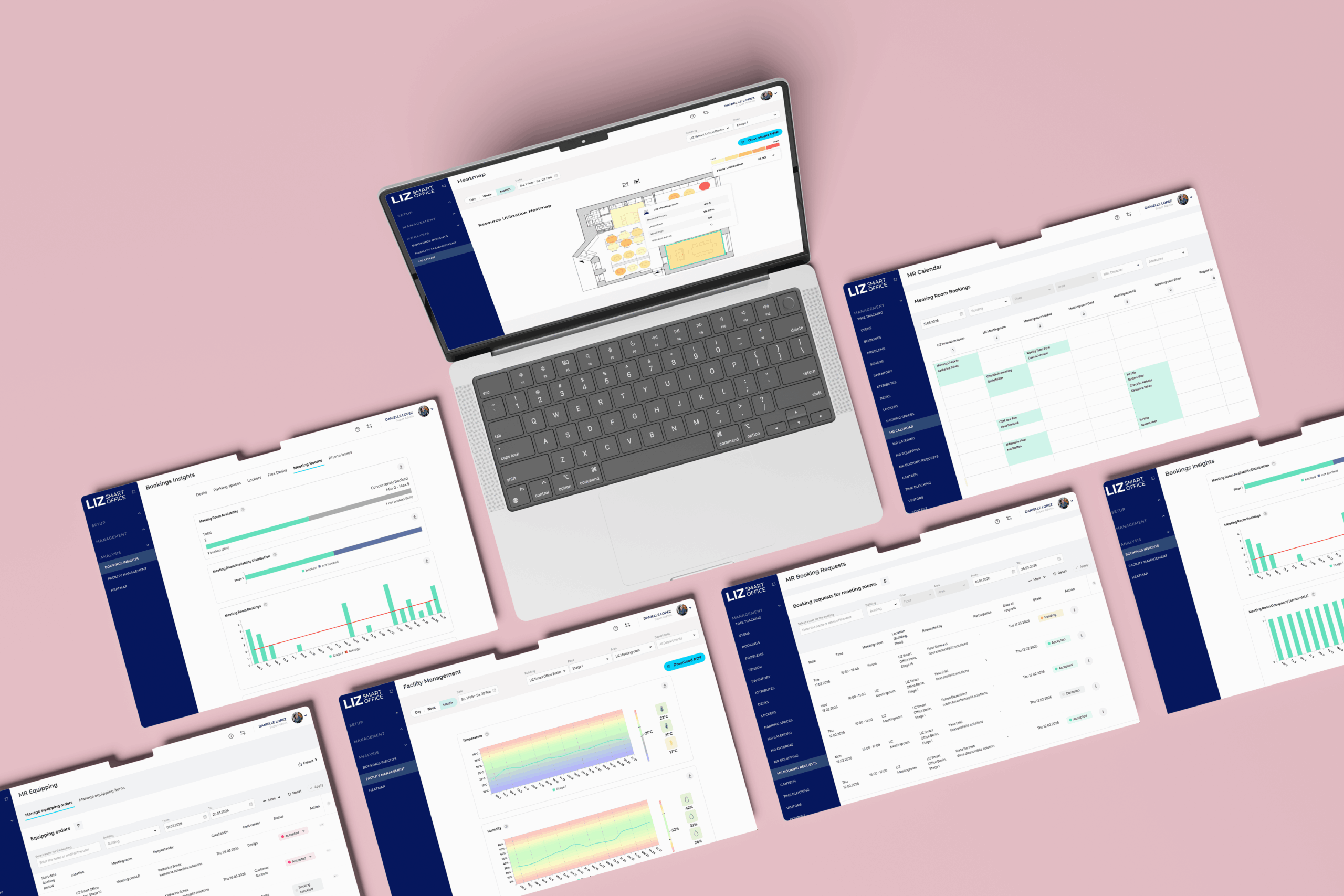
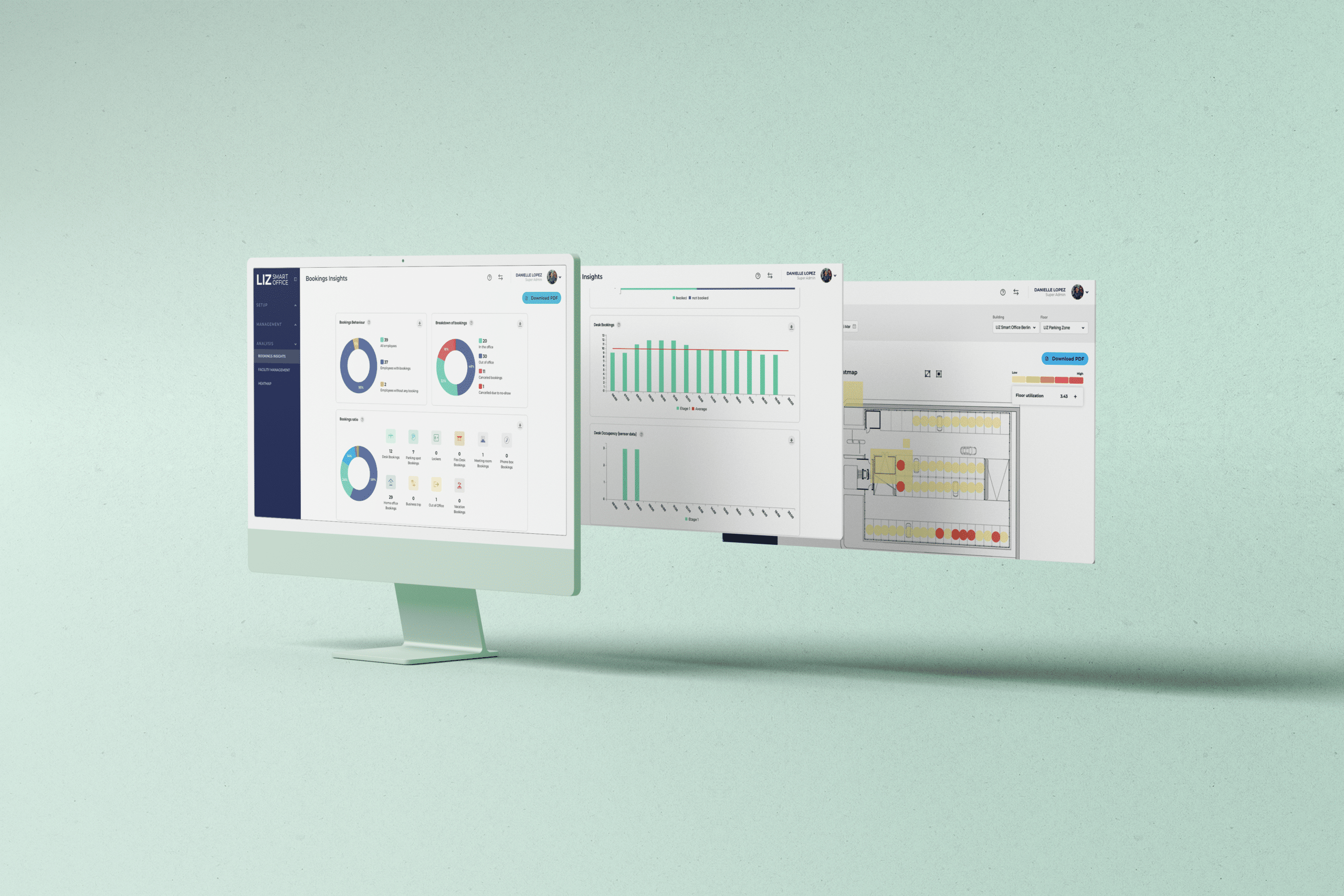
Modern workplace management platforms provide real-time analytics that support ongoing workplace optimization and informed decision-making.
The Role of Technology in Workplace Transformation
Technology cannot replace change management, but it can significantly support it.
An intuitive desk-booking solution removes many common frustrations associated with desk sharing, including:
- Finding available workstations
- Booking conflicts
- Uncertainty about workspace availability
- Coordinating team office days
Employees gain visibility, flexibility, and confidence when planning their office attendance.
The most successful workplace platforms typically combine:
- Desk booking
- Team scheduling
- Attendance management
- Meeting room booking
- Visitor management
- Workplace analytics
By simplifying daily workplace interactions, technology helps make organizational change more sustainable.
What Successful Organizations Do Differently
Researches shows that nearly 60% of employees are generally satisfied with desk sharing when specific conditions are met.
The most important success factors include:
- Ergonomic workstations
- Reliable technology
- Adequate availability of desks
- Quiet areas for focused work
- Spaces designed for collaboration
- Personal storage options
- Clear booking processes
Organizations that prioritize employee needs alongside operational efficiency typically achieve significantly higher levels of acceptance and engagement.
The success of desk sharing depends less on the concept itself and more on how effectively it is implemented.
Common Mistakes During Desk-Sharing Implementation
Mistake 1: Insufficient Communication
Employees receive too little information or are informed too late.
Mistake 2: Focusing Exclusively on Cost Savings
If desk sharing is presented only as a cost-cutting initiative, employee acceptance declines significantly.
Mistake 3: Failing to Involve Employees
Workplace changes are imposed rather than developed collaboratively.
Mistake 4: Lack of Supporting Technology
Without a digital booking system, employees often experience uncertainty and frustration.
Mistake 5: No Measurement of Success
Organizations miss opportunities to optimize their workplace strategy through data and feedback.
Conclusion: Desk Sharing Is Primarily a Change Management Initiative
Desk sharing is not simply a workplace management project. It fundamentally changes employee behaviors, workplace culture, and organizational routines.
Companies that strategically manage this transition achieve higher employee acceptance, better workplace experiences, and more efficient use of office space.
The key takeaway is simple:
Employees do not embrace workplace transformation merely because it is technically possible. They embrace it when they understand the benefits, feel involved in the process, and experience meaningful improvements in their daily work lives.
That is why change management should be a core component of every desk-sharing strategy from day one.
FAQ
Häufig gestellte fragen
Most desk-sharing projects fail not because of technology, but because of a lack of employee acceptance. In many cases, organizations communicate changes too late or focus solely on cost savings. This often creates the perception that employees are simply being asked to give up their personal workspace.
Other common reasons for failure include:
- Lack of change management
- Insufficient communication of goals and benefits
- Failure to involve employees in the planning process
- Too few workstations or poorly designed office layouts
- Absence of desk-booking software
- No ongoing measurement of success after implementation
Successful organizations, therefore treat desk sharing as a cultural and organizational transformation rather than just a workspace optimization initiative.
Employees are more likely to support desk sharing when they clearly understand the personal benefits. Instead of focusing on cost reductions, organizations should emphasize how the concept improves the employee experience.
Key benefits include:
- Greater flexibility in choosing where to work
- Improved collaboration across teams
- Modern and ergonomic work environments
- Better support for hybrid work models
- Increased transparency through digital desk booking
Early employee involvement is particularly important. Workshops, surveys, and pilot programs help address concerns and allow employees to contribute to the design of the new workplace. The more employees participate in the change process, the higher the acceptance rate tends to be.
Change management is the foundation of successful hybrid work implementation. While technology enables new ways of working, change management ensures that employees adopt and sustain those new behaviors over the long term.
Key responsibilities include:
- Developing a clear change strategy
- Communicating objectives and expectations transparently
- Training employees and managers
- Supporting cultural transformation
- Establishing continuous feedback mechanisms
Hybrid work models fundamentally change work routines, communication patterns, and team dynamics. Effective change management helps reduce uncertainty and creates a positive employee experience throughout the transition.
Measuring success is a critical part of any desk-sharing strategy. Data-driven insights help organizations determine whether office space is being used efficiently and whether employees are adapting positively to the new workplace model.
Important KPIs include:
Workspace Utilization Rate
Measures how many desks are actually being used and helps optimize office capacity.
Office Attendance Rate
Tracks how often employees come into the office compared to working remotely.
Desk Booking Rate
Analyzes adoption of the desk-booking platform and identifies potential engagement issues.
Employee Satisfaction
Measures employee perception of the desk-sharing model through surveys and feedback programs.
Space Efficiency
Evaluates how much office space is required per actively used workstation.
Team Collaboration Rate
Assesses how frequently teams coordinate office attendance and collaborate in person.
Cost per Workstation
Provides insights into cost savings and the overall return on investment of the workplace strategy.
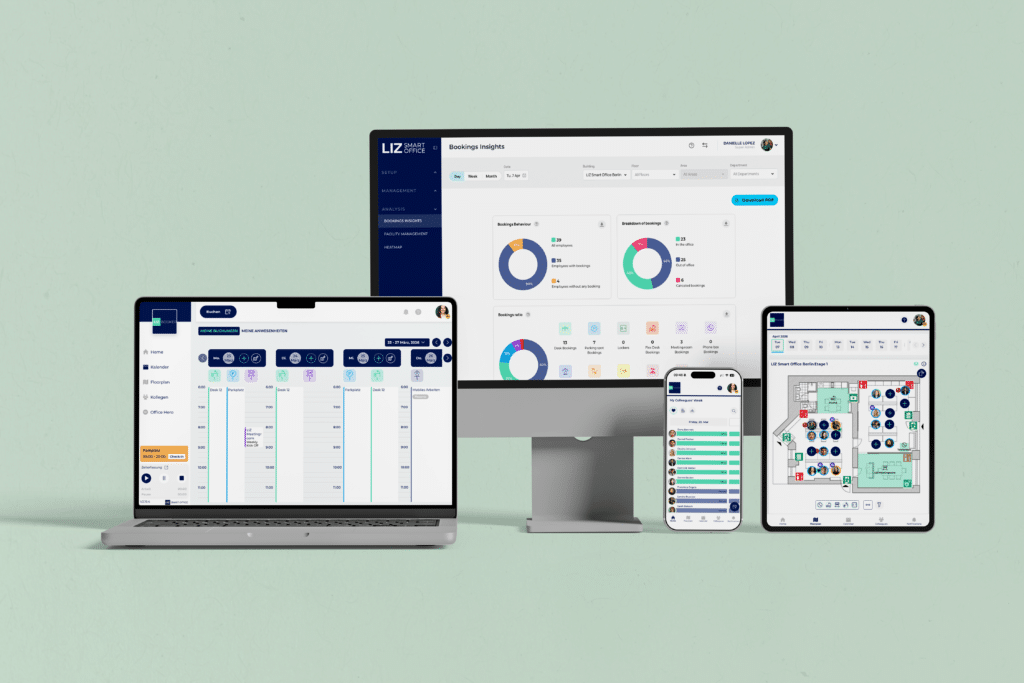
Modern workplace management platforms such as LIZ Smart Office provide these metrics automatically, enabling organizations to make informed, data-driven decisions.
Professional desk-sharing software significantly simplifies the transition to flexible workspaces. It increases transparency, reduces administrative effort, and improves the overall employee experience.
Key features of a modern workplace platform include:
- Real-time desk booking
- Interactive office floor plans
- Team and attendance planning
- Meeting room booking
- Visitor management
- Workplace analytics and reporting
- Mobile app access
- Integration with Microsoft 365 and Outlook
An all-in-one platform such as LIZ Smart Office enables organizations to manage desk sharing, hybrid work, and workplace operations from a single solution. At the same time, integrated analytics provide valuable data to support change management and continuous workplace optimization.