A new approach to car park management: Why companies should manage their car parks digitally.
For many commuters, finding a parking space is one of the biggest sources of stress in their daily working lives. Conflicts arise regularly, particularly in companies with limited parking spaces: Who is allowed to park today? Who will be late and end up without a space? Are there designated parking spaces, or does the ‘first come, first served’ principle apply?
With the increasing prevalence of hybrid working models, this problem is becoming even more acute. Whilst on some days numerous parking spaces remain unused, on other days there are simply not enough spaces to go round.
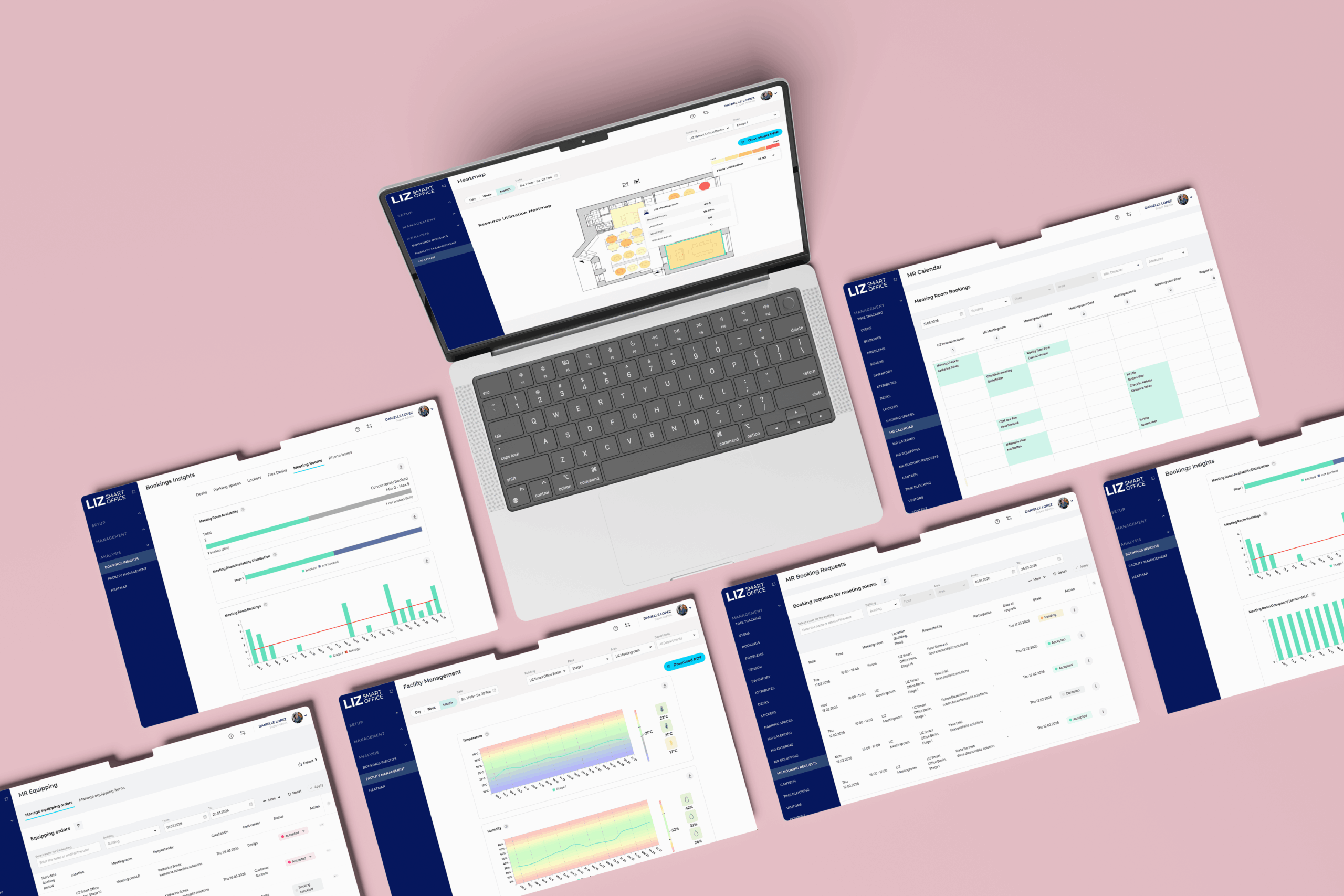
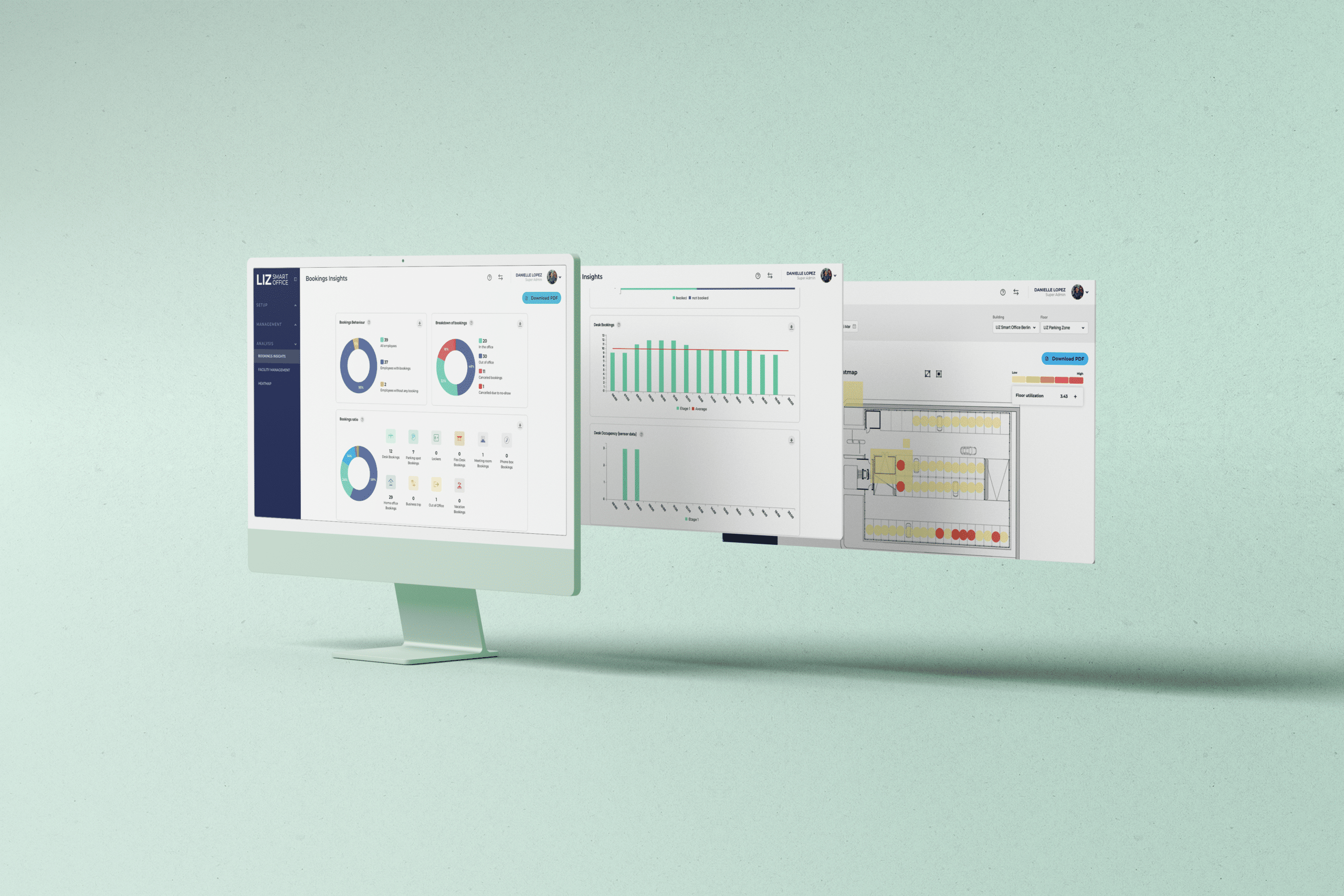
Intelligent car park management creates transparency, fairness and optimal utilisation of available resources. Modern solutions such as LIZ Smart Office automate the allocation of company parking spaces and make the entire process significantly easier for both companies and employees.
Why Today’s Parking Shortage Is More Than Just a Convenience Issue
In many companies, the way parking spaces are allocated has remained virtually unchanged for years. The following are still common:
- permanently reserved parking spaces
- Excel spreadsheet
- Outlook calendars
- paper lists at reception
- email enquiries to office management
However, this approach is becoming increasingly ineffective.
Particularly with hybrid working models, the actual demand for parking spaces changes on a daily basis.
Typical challenges include:
- significantly more staff than there are available parking spaces
- unused reserved parking spaces
- daily enquiries to office management or reception
- discussions about preferential
- treatment for individual staff members
- unnecessary time wasted searching for a parking space
- late starts to the working day
The result is unnecessary frustration, even before the working day has properly begun.
How Hybrid Work Exacerbates the Parking Problem
Previously, employees came into the office almost every day, making permanent spot assignments viable. Today, office and work-from-home days alternate dynamically.
This leads to dramatic swings in occupancy:
|
Monday |
Tuesday |
Wednesday |
Thursday |
Friday |
|
95 % |
40 % |
100 % |
70 % |
55 % |
Companies often realize too late that they actually have enough total spaces—they are simply not being used efficiently.
A digital parking management system solves precisely this problem.

What Is an Intelligent Parking Booking System?
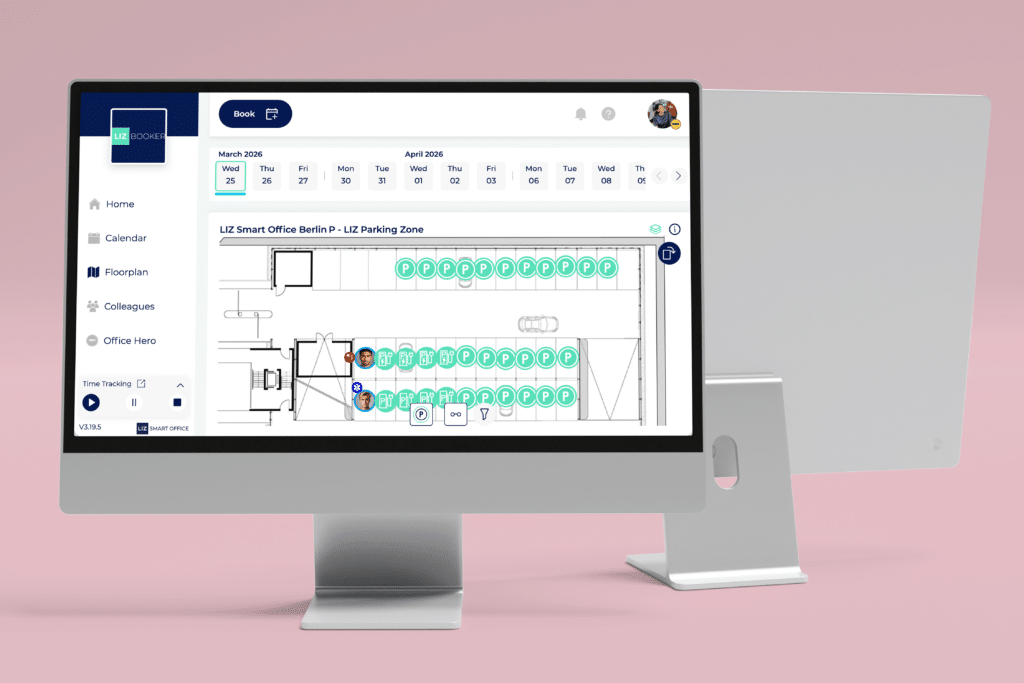
A parking booking system allows employees to reserve open parking spots in advance of their office days. The allocation happens automatically based on defined organizational rules.
Depending on company policy, these parameters can include:
- First-come, first-served logic
- Priority for field sales teams
- Priority for employees with disabilities
- Executive reservations
- Visitor parking
- Fleet/pool vehicles
- EV charging stations
- Rotating department quotas
- Waitlists
- Automatic release of unused spots
All stakeholders have full transparency at all times regarding:
- Available spaces
- Active reservations
- Cancelled bookings
- Last-minute openings
This virtually eliminates manual administration.
Key Benefits of Digital Parking Management
1. Fair Allocation for All Employees
Nothing breeds discontent faster than the perception of unfair treatment. A digital booking system establishes clear, traceable rules. Every booking is transparent, so employees understand why they received a spot, why none are currently available, or when they will advance on the waitlist. This dramatically improves acceptance.
2. Higher Utilization of Existing Spaces
In many organizations, parking spots remain empty daily, not because they aren’t needed, but because assigned users pivot to working from home or attending offsite meetings. Intelligent parking software automatically releases these spots back into the pool, significantly increasing actual space utilization.
3. Reduced Administrative Burden
Office managers and HR spend an astonishing amount of time answering questions like:
- “Is there still a spot available?”
- “Can I reserve one for tomorrow?”
- “I won’t be coming in today, can my colleague take my spot?”
With a digital solution, employees handle these processes self-sufficiently, drastically reducing administrative overhead.
4. Enhanced Employee Experience
The workday starts on the commute. Arriving with the peace of mind that a parking spot is secured makes for a far less stressful morning. This enhances the overall employee experience before work even begins, a predictability that is increasingly valued in hybrid environments.
5. Sustainable Space Efficiency
Corporate real estate is expensive, and parking spaces are no exception. Intelligent parking management ensures existing infrastructure is fully optimized, allowing organizations to:
- Avoid leasing or building additional spaces
- Cut rental and construction costs
- Better manage on-site traffic flow
Key Features to Look For in Modern Parking Software
A professional system should do far more than just reserve spots. Crucial features include:
- Digital parking reservations
- Mobile booking via app
- Desktop access
- Calendar integration
- Integration with desk booking
- Automated waitlists
- Prioritization rule engines
- Visitor parking management
- EV charging station booking
- Real-time availability tracking
- Automatic cancellation policies
- Utilization analytics
- Role and permission management
The more closely parking management is integrated with desk booking and attendance planning, the more efficiently your entire workplace footprint can be managed.
Why Parking Booking and Desk Booking Belong Together
Many companies start by digitizing desk bookings while ignoring the commute. Yet, a seamless office day begins with the journey to the office.
A fully digital office experience encompasses:
- Selecting the office day
- Booking a desk
- Reserving a parking spot
- Booking a meeting room
- Checking co-worker presence
- Registering visitors
When these workflows reside on an integrated platform, context-switching is minimized and user experience is dramatically improved.
Real-World Example: Parking Management in a Hybrid Workplace
A company scenario:
- 320 employees
- 140 office desks
- 85 parking spaces
Before Digitalization:
- Fixed spot allocations
- Numerous empty spaces daily
- Constant emails to Office Management
- Complaints about unfair allocation
After Implementing a Digital Parking Booking System:
- Automated reservations
- Waitlist functionality
- Automatic release of unused spots
- Transparent booking process for everyone
- Higher overall parking utilization
- Noticeably reduced workload for Office Management
The Result: Reduced administrative overhead, maximized resource efficiency, and a smoother start to the workday for everyone.
Conclusion: Digital Parking Management Delivers Fairness and Efficiency
Parking shortages cannot always be solved by adding more spaces, often, smarter utilization of existing real estate is all it takes. Particularly in hybrid work environments, a digital parking booking system ensures open spots are allocated efficiently, vacancies are eliminated, and employees are treated fairly.
With LIZ Smart Office, organizations can consolidate parking booking, desk management, and other workplace processes into a single centralized platform. This streamlines administration, improves planning reliability, and creates a stress-free start to the workday, for employees, Office Management, and HR alike
FAQ
Frequently Asked Questions
Employees reserve their parking space ahead of time using a mobile or web app. The system displays available spots in real time and automatically applies company-defined allocation rules.
Yes. Organizations can configure custom rules for executives, field staff, employees with disabilities, visitors, or EV drivers.
Modern systems manage automated waitlists. If a reservation is cancelled, the spot is automatically reallocated to the next eligible person in line.
Yes. An integrated solution where desk, parking, and room bookings are managed centrally within one platform provides maximum efficiency.
Companies benefit from higher space utilization, lower administrative workload, fair allocation, an improved employee experience, and overall optimization of their facilities.