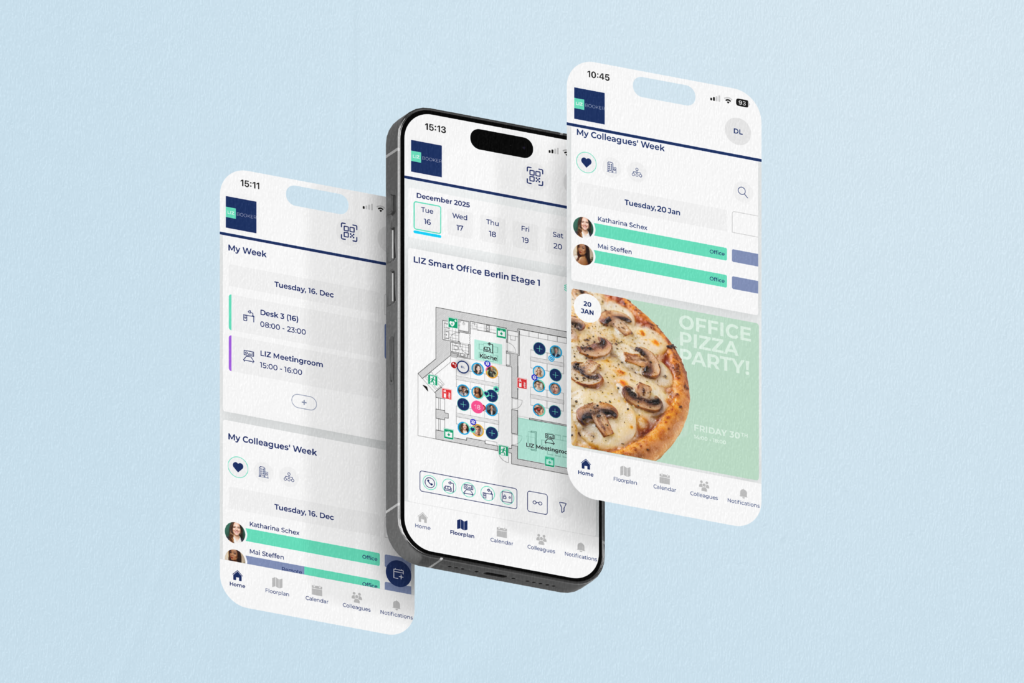
The modern world of work is changing rapidly. Hybrid working, flexible workspaces, and digital collaboration tools are now the norm in many companies. In this context, the term smart office is being used more and more frequently. But what exactly does it mean? What technologies are behind it? And why are more and more companies investing in smart office solutions?
In this article, you will learn:
- What a smart office is
- What benefits it offers
- What technologies are used
- Why smart offices are crucial for hybrid working
- How companies can improve productivity, staff satisfaction and space efficiency
Definition: What is a smart office?
It is a digitally connected office that uses technology, data, and automation to make workspaces more efficient, flexible, and user-friendly.
This involves linking various systems together, for example:
- Desk booking systems
- Room booking
- Sensor technology & IoT technologies
- Access control
- Workspace analytics
- Climate control & lighting
- Collaboration software
- Visitor management
A smart office aims to dynamically adapt working environments to the needs of employees and organisations.
In particular, it supports:
- Hybrid working
- Flexible workplace models
- More efficient use of space
- Data-driven decision-making
- A better employee experience
Why are smart offices becoming increasingly important?
The world of work has changed permanently since the pandemic. Many companies are now adopting hybrid working models on a permanent basis.
According to a recent Gallup study, 52% of employees who are able to work remotely are already working in a hybrid arrangement, whilst only 21% work entirely from the office.
Furthermore, the data shows that:
- 76% of hybrid employees report a better work-life balance
- Hybrid teams are often more engaged than teams working exclusively in-office
- Teams with clearly defined hybrid working processes are 66 % more engaged and 29 % less likely to suffer from Burnout.
These developments are increasing the pressure on companies to design offices more flexibly and intelligently.
The key components of a smart office
1. Desk Booking & Flexible Workspaces
In a smart office, employees often no longer have a fixed desk. Instead, workspaces are booked flexibly via software.
Advantages:
- Better utilisation of space
- Fewer vacant spaces
- Support for hybrid teams
- Transparent workspace availability
This reduces unnecessary office space and operating costs, particularly in the context of hybrid working.
2. Meeting Room Booking
Smart meeting room systems enable:
- Digital room bookings
- Automatic release of unused rooms
- Integration with Outlook or Google Calendar
- Real-time occupancy displays
This helps to reduce inefficient meetings and the use of unused rooms.
3. Sensors & IoT Technologies
Smart offices often use IoT (Internet of Things) sensors to collect data on office utilisation.
The data collected includes, for example:
- Workstation occupancy
- Room temperature
- Air quality
- Movement patterns
- Energy consumption
This data helps companies to optimise office space in a data-driven way.
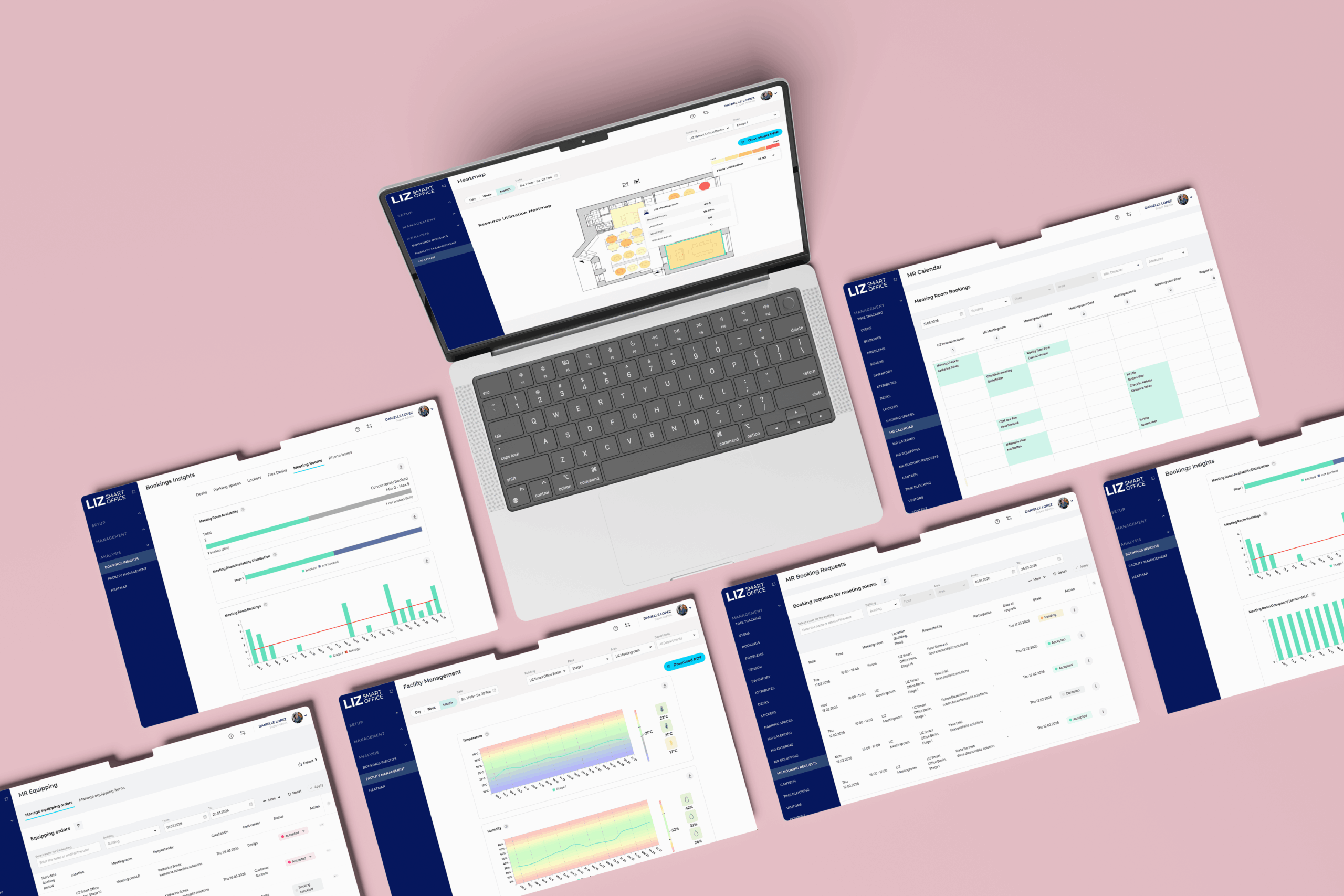
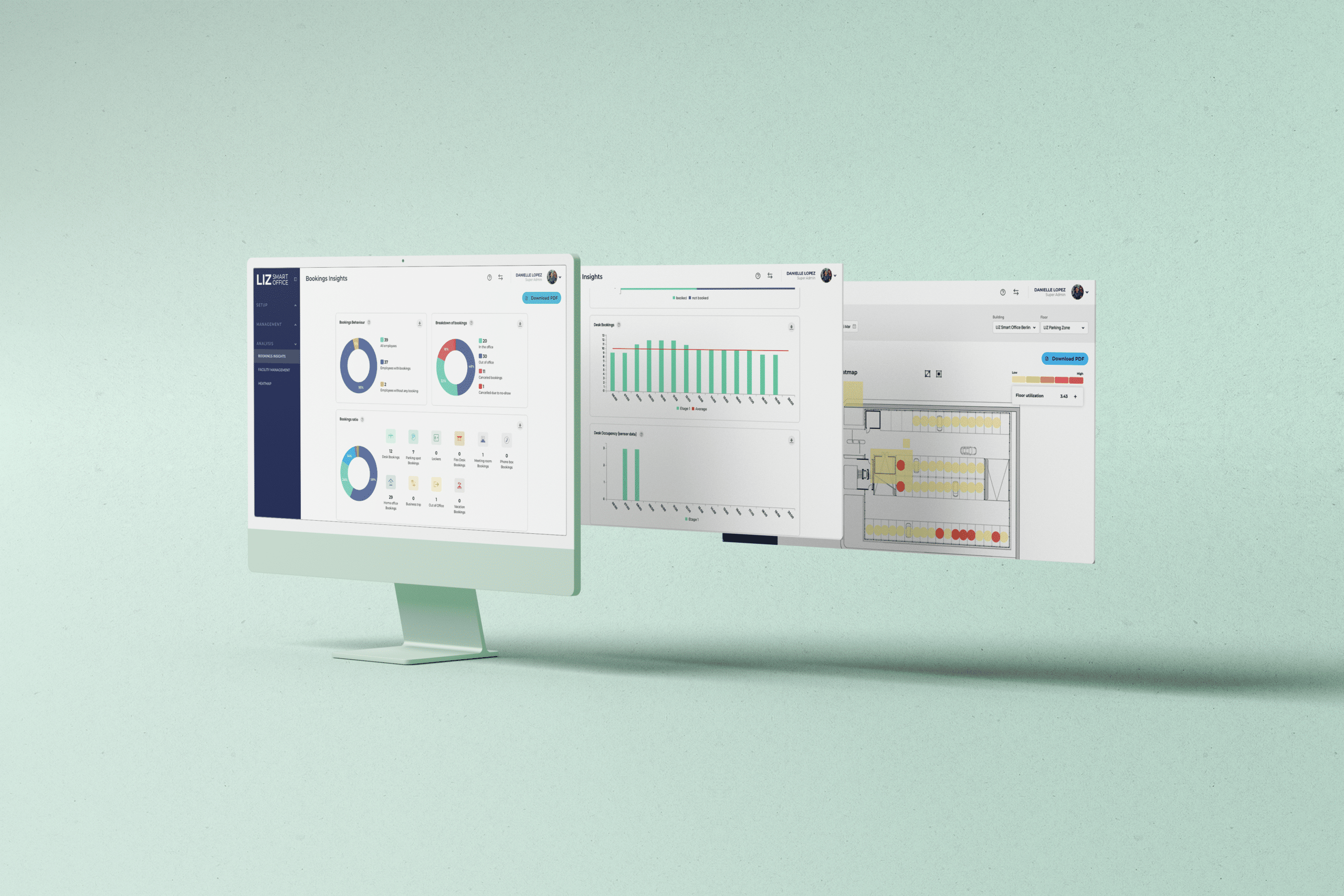
4. Workplace Analytics
Modern offices are increasingly based on data analysis.
Companies gain insights into:
- Actual office utilisation
- Preferred workspaces
- Peak times
- Meeting patterns
- Space efficiency
This means that decisions can no longer be made purely ‘on a hunch’, but are instead data-driven.
5. Automation & Energy Efficiency
Smart systems automatically control:
- Lighting
- Heating
- Air conditioning
- Access control systems
- This reduces energy consumption and operating costs.
The global smart office market is therefore growing rapidly: according to Grand View Research the market volume was already around USD 53.9 billion in 2024 and is set to rise to USD 113.8 billion by 2030.

Benefits of a smart office
1. Higher employee satisfaction
Flexible working arrangements are now among the most important factors in employee retention.
According to Gallup, 9 out of 10 employees who can work remotely now prefer to do so at least part of the time.
Companies with modern workplace concepts benefit from:
- greater employer appeal
- a better employee experience
- lower staff turnover
- higher motivation
2. Higher productivity
Hybrid working can boost productivity, provided that processes and technologies are implemented correctly.
Studies show:
- 74% of hybrid workers feel more productive
- 76% feel more motivated
- 75% report lower levels of stress and burnout
Smart offices provide the technological foundation for this.
3. Optimised office space & lower costs
Many companies no longer make full use of their office space.
With smart office solutions, companies can:
- Reduce vacancy rates
- Plan space more efficiently
- Cut rental costs
- Scale workspaces to meet demand
There is enormous potential for savings, particularly with desk sharing and hybrid working.
4. Better collaboration in hybrid teams
Smart offices combine physical and digital collaboration.
These include:
- Video conferencing systems
- Collaboration platforms
- Smart meeting rooms
- Digital whiteboards
This ensures that teams remain efficiently connected, even across different locations.
Challenges of a smart office
Despite its many advantages, there are also challenges:
1. Data Protection & Security
As smart offices collect a great deal of usage data, GDPR-compliant processes are essential.
Companies must communicate transparently:
- What data is collected
- Why it is collected
- How it is protected
2. Change Management
A smart office often entails cultural change.
Employees must adapt to:
- Flexible workspaces
- Hybrid processes
- Digital tools
- New ways of working
A successful roll-out therefore requires clear communication and training.
3. Technology Integration
Many companies use different systems. A smart office platform should therefore be as easy as possible to integrate with:
- Microsoft Teams
- Outlook
- HR systems
- access solutions
- calendar software
What does the future of the smart office look like?
The trend is clearly moving towards:
- data-driven workplaces
- AI-supported space planning
- personalised workplace experiences
- sustainable office buildings
- fully hybrid working models
Smart offices are increasingly becoming the norm for modern businesses.
In the future, the key question will no longer be:
‘Do we need a smart office?’
But rather:
‘How smart and flexible is our workplace already?’
Conclusion: Smart offices form the basis of modern working environments
A smart office combines technology, flexibility, and data to make modern workplaces more efficient and attractive.
Companies benefit from:
- higher staff satisfaction
- better use of space
- lower costs
- optimised collaboration
- data-driven decisions
Particularly in the age of hybrid working, the smart office is becoming a key competitive factor.
With intelligent workplace solutions such as desk booking, room management, and workplace analytics, LIZ Smart Office supports companies in successfully implementing modern working environments.